

Specifications
Broker
Jet Aviation Brokers
John Carter
+1 (305) 555-0142
broker@example.com
Aircraft Details
- Maintenance: Maintained under FAR Part 91; damage status confirmed due to runway veer-off incident.
- Engine: TPE331-10T model; two engines, each with 1182 hours since overhaul, TBO of 5400 hours.
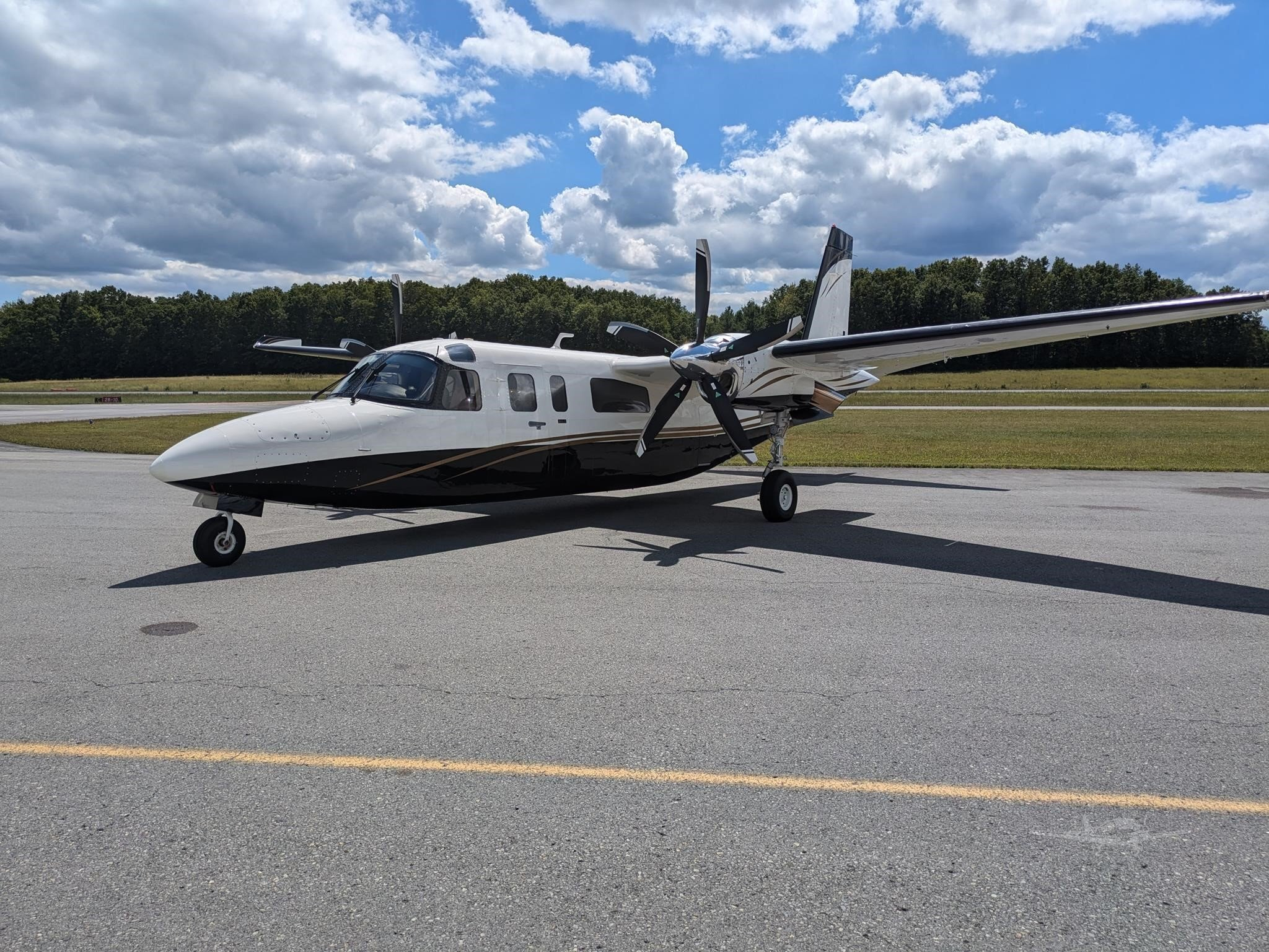
- Additional Equipment: Supreme Commander mod, Aerodyne winglets, FIKI ice protection, Cleveland wheels & brakes, Woodward fuel controllers, MT 3-blade props, oxygen system, pressurized cabin, de-ice systems, extended baggage compartment, super soundproofing.
- Avionics: Equipped with S-TEC System 3100 DFCS autopilot, dual Garmin GTN-750Xi communication and navigation radios, Collins DME-40, Garmin G600 TXi EFIS, Bendix/King KFC-300 flight director, and various safety systems including TAWS and weather radar.
- Features: Equipped with extended range fuel, synthetic vision technology, winglets, freon air conditioning, and ADS-B capability.
- Interior: Executive configuration for 6 passengers; tan leather seating, LED lighting, and Keith freon air conditioning.
- Exterior: Recently painted in Matterhorn white with deep blue and gold metallic trim (2019).
About this Model
Overview
The Turbo Commander 690B is a pressurized, twin-engine turboprop designed around efficient regional transportation rather than maximum cabin volume. It is typically operated as a corporate or owner-flown utility aircraft where access to shorter runways, straightforward systems, and turboprop operating economics matter more than jet cruise speeds. Buyers usually value it as a dependable platform for frequent point-to-point trips, especially where smaller airports reduce ground time and improve scheduling flexibility.
Mission Fit
The 690B tends to fit missions where block time efficiency comes from using closer airports rather than from top cruise speed. It is commonly used for day trips and multi-stop regional schedules, with the pressurized cabin supporting higher-altitude routing when needed. Payload and range planning remain important on longer legs or in hot/high conditions, particularly if full seats, baggage, and higher cruise altitudes are desired.
Cabin
Cabin experience is functional and businesslike, with typical configurations emphasizing forward club seating and practical baggage carriage rather than a large-cabin layout. Expect a narrower, more aircraft-like environment than most business jets, but with the comfort advantages of pressurization and the ability to cruise above much of the weather. Noise and vibration characteristics are generally those of a turboprop; cabin condition varies significantly by interior refurbishment history.