

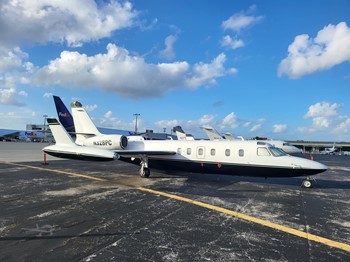
Specifications
Broker
SN 5024
+17862240675
Aircraft Details
- Model: Westwind II
- Condition: Used
- Flight Rules: IFR
- Range: 2,000 NM
- Max Landing Weight: 19,000 lb
- Winglets: Yes
- Maintenance Tracking: Traxxall
- Engine Make/Model: Garrett TFE731
- Engine 1 Time: 8,909.6 SMOH
- Engine 1 TBO: 4,200 hours
- Engine 1 Cycles: 6,773
- Engine 2 Time: 9,013.6 SMOH
- Engine 2 TBO: 4,200 hours
- Engine 2 Cycles: 6,874
- Avionics: Dual Universal FMS, Collins ADF-60, Collins ALI-80B, Collins APS-80, Dual Collins VHF-22C, Universal Class A TAWS, TCAS-II, and more.
- Interior: Executive configuration, 7 passenger capacity, belted lavatory.
- Exterior Rating: 8
- Interior Rating: 7
- Equipped Features: ADS-B, RVSM, Traffic Collision Avoidance System, Weather Radar, Thrust Reversers, among others.
About this Model
Overview
The IAI Westwind 2 is a legacy midsize business jet derived from the Westwind airframe family, known for higher-speed cruise compared with many contemporaries of its era and for operating from a wide range of paved airports. It typically appeals to buyers who want a capable point-to-point aircraft for regional-to-long regional missions and who are comfortable with older-generation avionics and cabin systems, or who plan targeted modernization.
Mission Fit
In typical operations, the Westwind 2 is used for owner and corporate travel where time en route matters and cabin expectations are ‘traditional business jet’ rather than large-cabin. It can cover many domestic and near-international city pairs efficiently, but mission planning should account for payload/range tradeoffs, alternate and reserve requirements, and the specific aircraft’s avionics and equipment list.
Cabin
Cabin experience is defined by a classic midsize-jet cross-section with club-style seating common, practical aisle access, and a layout optimized for business travel rather than open, lounge-like space. Noise levels, pressurization feel, and environmental controls depend heavily on aircraft condition and interior refurbishment history; many examples have been updated with modern materials and selective comfort upgrades.