

Specifications
Aircraft Details
- Only 262-265 total hours since new, regularly flown and maintained by Advanced Helicopter, Woodland, CA
- Corporate owned, always hangered, one pilot since new
- Garmin G1000H NXi integrated flight deck with synthetic vision, terrain avoidance, and two 10.4” high-res LED screens
- GMA 350C audio panel with Bluetooth, GRA-55 radar altimeter, GTX 345R ADS-B In & Out transponder, GSU 75H ADAHRS, XM Weather
- IFR kit (single pilot certified), 3-axis autopilot with coupled flight modes, stability & command augmentation, approach/go-around, automatic recovery
- Rolls Royce 250C47/4 engine, 262 hours since new
- Tail rotor camera (MFD display), Precise Flight Pulselites, polycarbonate windshields, tail boom radar altimeter mount, aluminum entrance and folding maintenance steps, carbide skid shoes, jettisonable crew doors
- 28 amp battery, dual controls, high skid gear with flightsteps, high visibility main rotor blades, wire strike protection, main rotor brake, LED lighting (interior/exterior)
- 5000 internal/6000 external load, AA rubber-mounted chin bubbles, Artex C406-NHM ELT, inlet screen, expanded avionics shelf, REB Technologies NVG cockpit lighting
- Interior: pilot/co-pilot and 5-place club seating, blue/gray fabric, mixed blue carpet, cup holders, passenger headphone jacks
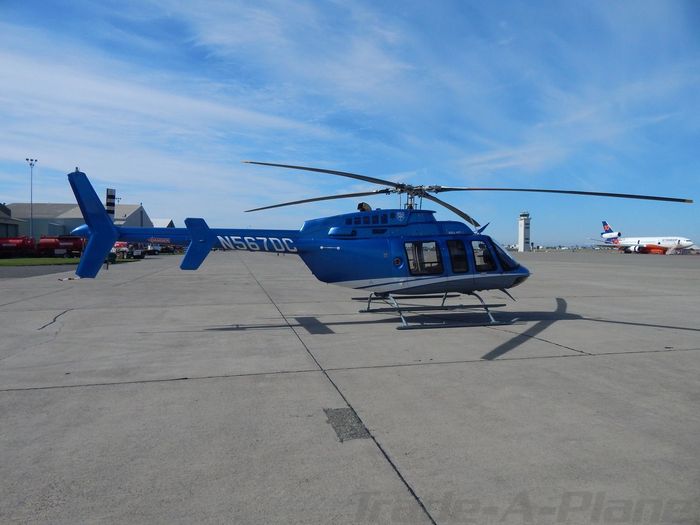
- Overall steel blue with dark gray & Matterhorn white accents, rated "as new"
- Recent 3-month inspection 04/28/2026 @ 258.9 hours, ELT due 07/2030, 91.411 & 91.413 completed 09/2024
- Originally purchased for a government contract, mission fulfilled, lightly used
About this Model
Overview
The Bell 407GXi is an evolution of the 407 line aimed at operators who want a familiar, proven airframe paired with updated cockpit integration and improved powerplant performance margins. It is commonly selected for utility, corporate, public safety, and training missions where speed, payload flexibility, and straightforward single-engine operations matter more than all-weather, multi-engine redundancy.
Mission Fit
Typical missions center on short-to-medium sectors with frequent stops, operating from helipads, confined areas, or unimproved sites. The platform’s power and rotor system support productive performance in high density altitude environments, but payload-range tradeoffs remain central: additional fuel can quickly reduce available cabin load, particularly with mission equipment installed.
Cabin
Cabin layout is oriented around a single-pilot cockpit with club-style rear seating and good visibility. Noise and vibration levels are consistent with the light single-engine class; passenger comfort is generally strong for shorter legs and sightseeing, while longer legs depend on seating configuration, headset use, and installed options. Access and loading benefit from the wide doors and a cabin that can be configured for passenger, utility, or specialized missions.