

Specifications
Broker
Aircraft Details
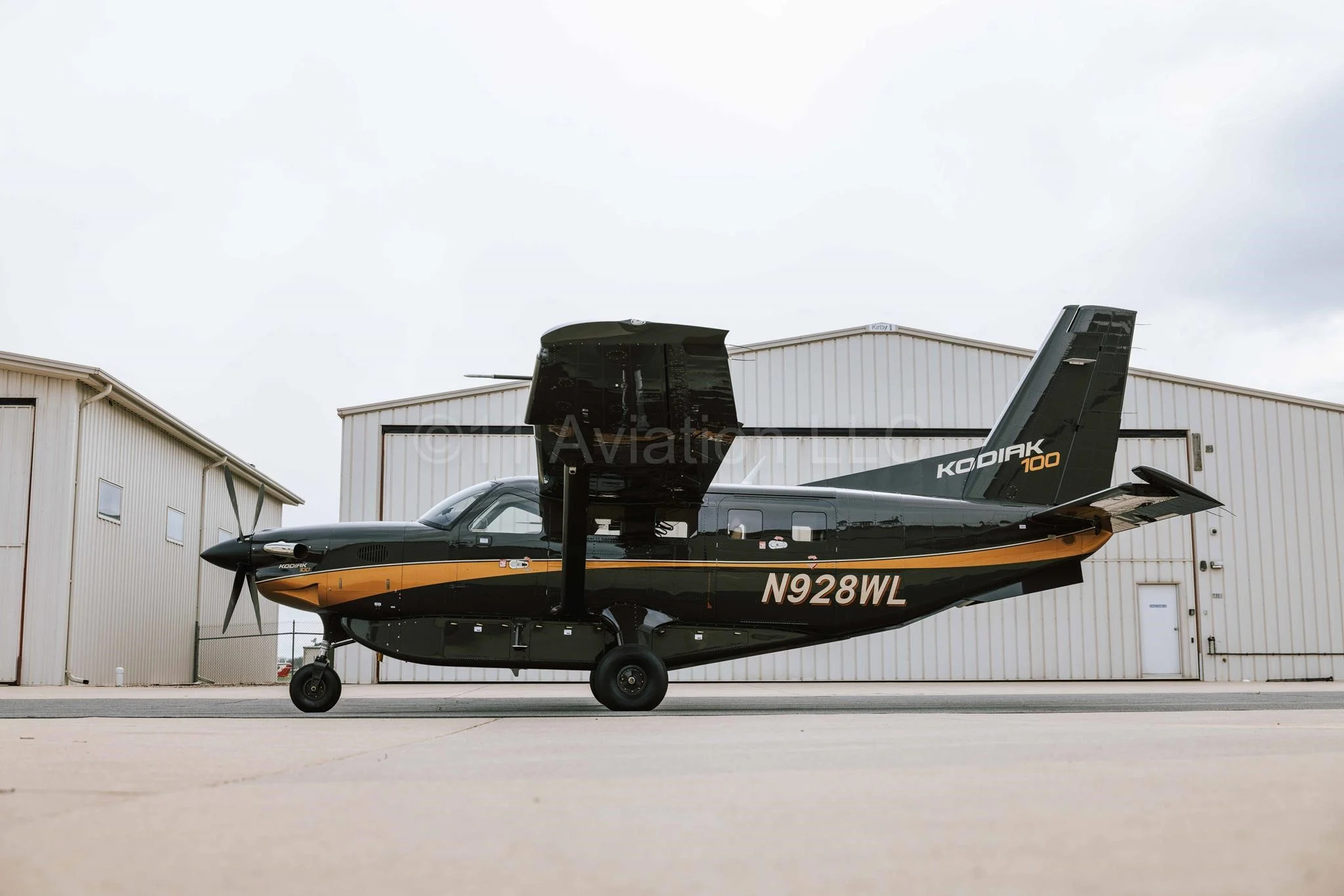
• First 2025 Model Year Kodiak 100 Series III on the open market, delivered October 2025
• Approximately 164 hours total time, single owner, always hangared, near factory-new condition
• Custom deep dark brown paint with copper/tan stripes and color-matched accents, cargo pod painted to match
• Equipped with cargo pod, full FIKI TKS ice protection (tank in pod), Summit Plus executive interior (warm brown, 8 seats), and large tire option (29" low-pressure)
• 4-blade Hartzell metal prop with pitch latch, 17" clearance, ~164 hours since new
• Pratt & Whitney PT6A-34 engine, 750 SHP, ~164 hours since new, 4000-hour TBO
• Garmin G1000 NXi avionics suite (3-screen), Garmin GFC 700 autopilot, GWX 8000 weather radar, GTS 800 traffic advisory, ADS-B In/Out, WAAS/LPV, GDL 60 cellular datalink, synthetic vision, ChartView, SurfaceWatch, dual audio panels, and more
• Full cabin dual-zone air conditioning, 10-place oxygen, 8 Bose headset jacks, high-power USB, BatteryMINDer, heated pitot/static tubes, ice detection lights
• Standard Airworthiness Certificate issued July 2025, next annual due July 2026, all inspections current
• Always maintained to near-new standards, no known damage history
About this Model
Overview
The Kodiak 100 Series III is a high-wing, fixed-gear, single-engine turboprop designed around utility missions where runway length, surface quality, and loading flexibility matter more than cruise speed or a pressurized cabin. It is commonly configured to switch between passengers, cargo, and medevac-style layouts with minimal downtime, making it a fit for operators who routinely fly into short or unimproved strips and need predictable dispatch with straightforward ground handling.
Mission Fit
This model suits point-to-point flying where the destination is the constraint—short runways, rough surfaces, limited ground support, or the need to carry bulky items. It can serve as a practical regional shuttle, adventure/outfitter platform, or special-mission aircraft. If your typical flying emphasizes high cruise efficiency, high-altitude comfort, or consistently long legs, other turboprops or light jets may align better.
Cabin
Cabin experience is oriented toward utility and access. The high-wing airframe supports good visibility and typically easier boarding/ground clearance around the cabin area. Interiors vary widely by operator: from durable, easy-clean passenger seating to more refined private-use finishes. Expect a functional environment with an emphasis on payload flexibility and practical stowage rather than a quiet, pressurized executive cabin.