

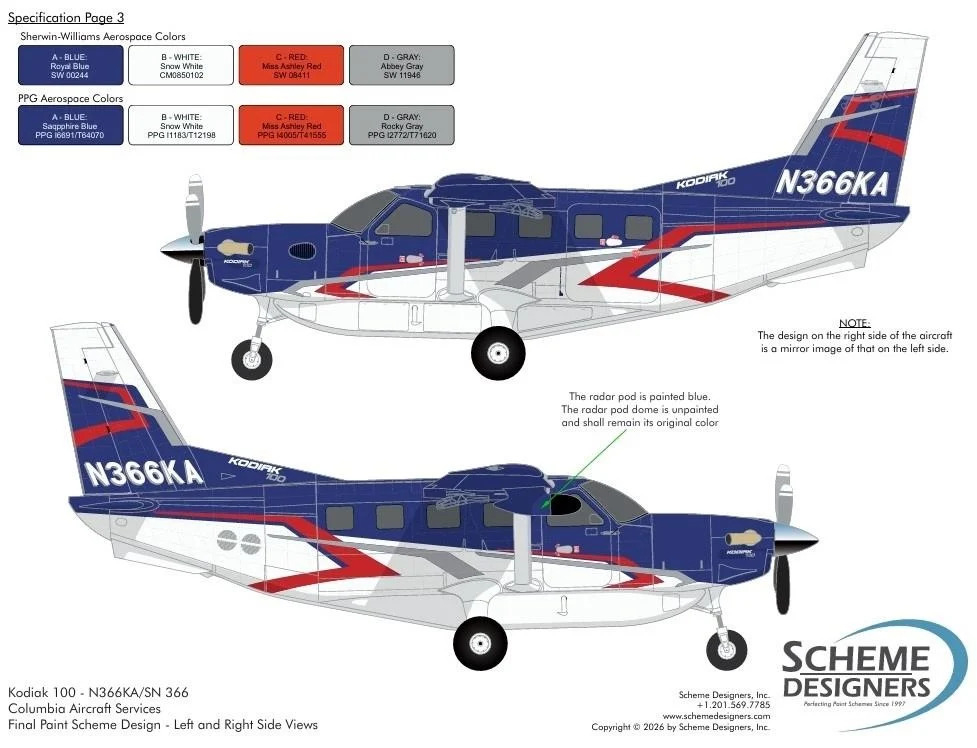
Specifications
Broker
Aircraft Details
- Location: Groton, Connecticut
- Condition: New, factory fresh
- Total time: 50 hours
- Range: 1,129 NM
- Max takeoff and landing weight: 7,255 lb
- Useful load: 3,530 lb
- Fuel capacity: 2,712 lb
- Complete logs included
- 4-year KODIAK Maintenance Program
- Engine: Pratt & Whitney PT6A-34, 50 hours since new, TBO 4000 hours
- Propeller: Hartzell, 5 blades, 50 hours
- Garmin G1000 NXi avionics suite with Synthetic Vision, dual PFDs, MFD, dual VOR/ILS, dual GPS, dual AHRS, dual ADC, ADS-B In/Out, GFC 700 autopilot with advanced features, Class-B TAWS, electronic checklist, integrated charts, Flight Stream 510, FIS-B weather, cockpit USB ports, Surfacewatch, Chartview
- Flight Into Known Icing (FIKI) and inadvertent ice protection
- Additional avionics: GTS 800 TAS, WX-500 Stormscope, GRA 55 radar altimeter, GDL 69A XM datalink with audio infotainment
- External baggage compartment, TKS ice protection system
- Brand-new exterior and interior (2026), 8 seats, plush Summit+ tan interior
- Dual aft body strakes
- Airworthy
About this Model
Overview
The Kodiak 100 Series III is a high-wing, fixed-gear, single-engine turboprop designed around utility missions where runway length, surface quality, and loading flexibility matter more than cruise speed or a pressurized cabin. It is commonly configured to switch between passengers, cargo, and medevac-style layouts with minimal downtime, making it a fit for operators who routinely fly into short or unimproved strips and need predictable dispatch with straightforward ground handling.
Mission Fit
This model suits point-to-point flying where the destination is the constraint—short runways, rough surfaces, limited ground support, or the need to carry bulky items. It can serve as a practical regional shuttle, adventure/outfitter platform, or special-mission aircraft. If your typical flying emphasizes high cruise efficiency, high-altitude comfort, or consistently long legs, other turboprops or light jets may align better.
Cabin
Cabin experience is oriented toward utility and access. The high-wing airframe supports good visibility and typically easier boarding/ground clearance around the cabin area. Interiors vary widely by operator: from durable, easy-clean passenger seating to more refined private-use finishes. Expect a functional environment with an emphasis on payload flexibility and practical stowage rather than a quiet, pressurized executive cabin.