

Specifications
Broker
Aircraft Details
- Model: TBM 910
- Condition: Used
- Engine: PT6A-66D, 1,770 hours since new
- TBO: 3,500 hours
- Avionics: Garmin G1000 NXi, dual GIA 63W, GDU 1050A and GDU 1550 displays, synthetic vision technology, ADS-B capable
- Cruise Speed: 330 knots
- Climb Performance: High authority
- Cabin: Executive-class, whisper-quiet, climate-controlled
- Interior: Black onyx leather seats with white stitching, anthracite black wool carpet, carbon fiber table, four high-output USB ports
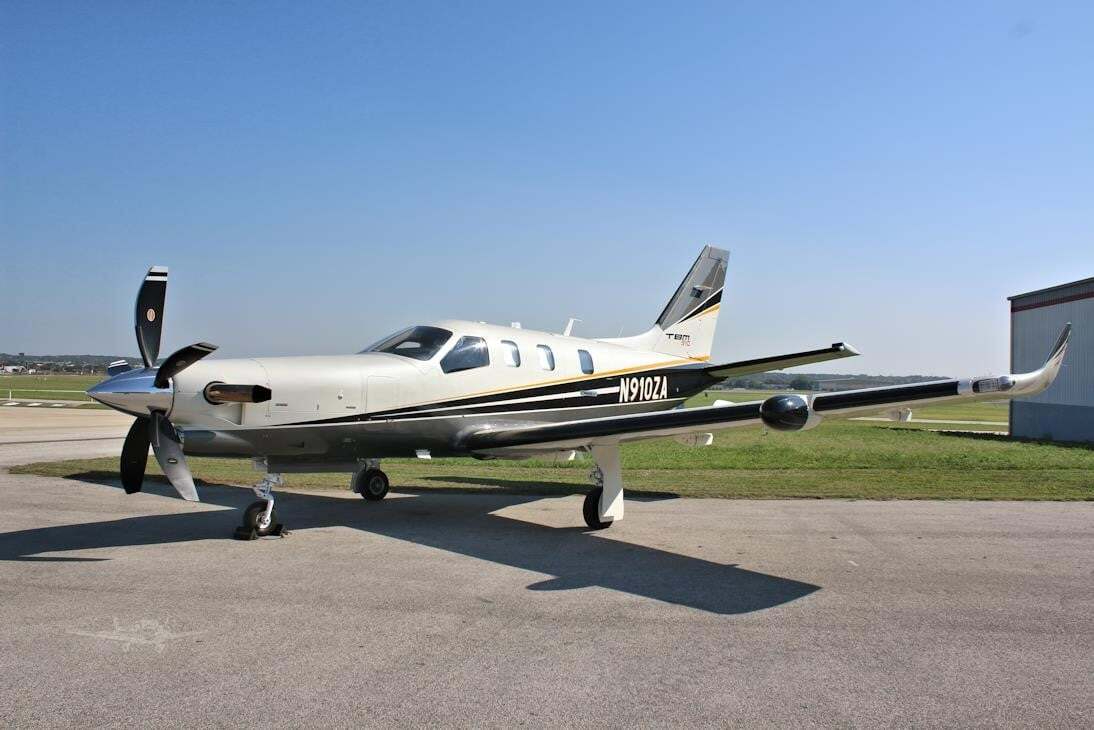
- Exterior: White top, black bottom, yellow and white striping
- Additional Equipment: Known Ice Certified, Hartzell 5-blade composite propeller, electrically heated windshields, LED lighting, automatic starter-generator shutoff, winglets
- Safety Features: Terrain Awareness & Warning System, Flight Data Recorder, advanced aural warning system
- Maintenance: Fresh Hot Section Inspection, maintained under FAR Part 91, certified known ice.
About this Model
Overview
The DAHER TBM 910 is a pressurized, single-engine turboprop designed around fast point-to-point trips with airline-like IFR capability but the operating simplicity of a single pilot. It sits in the “fast turboprop” space where cruise speed and climb performance are prioritized, while retaining access to shorter runways than most light jets. Typical buyers value direct routings between smaller airports, predictable dispatch, and a cockpit/cabin sized for 1–4 travelers with bags, with occasional additional passengers depending on layout and loading.
Mission Fit
The TBM 910 aligns well with business commuting, multi-stop days, and access-to-market missions where the destination airport is closer to the final meeting location. It is less well suited to consistently full cabins or missions that prioritize cabin space and onboard movement over speed and efficiency.
Cabin
Cabin comfort is typical of the TBM family: a compact, pressurized environment with club-style seating options and good external visibility for forward seats. Expect a ‘personal aircraft’ feel rather than a light-jet cabin; passengers generally remain seated for the flight. Noise levels are characteristic of single-engine turboprops and vary with power setting and propeller speed management, so headset use is common for maximum comfort on longer legs.