

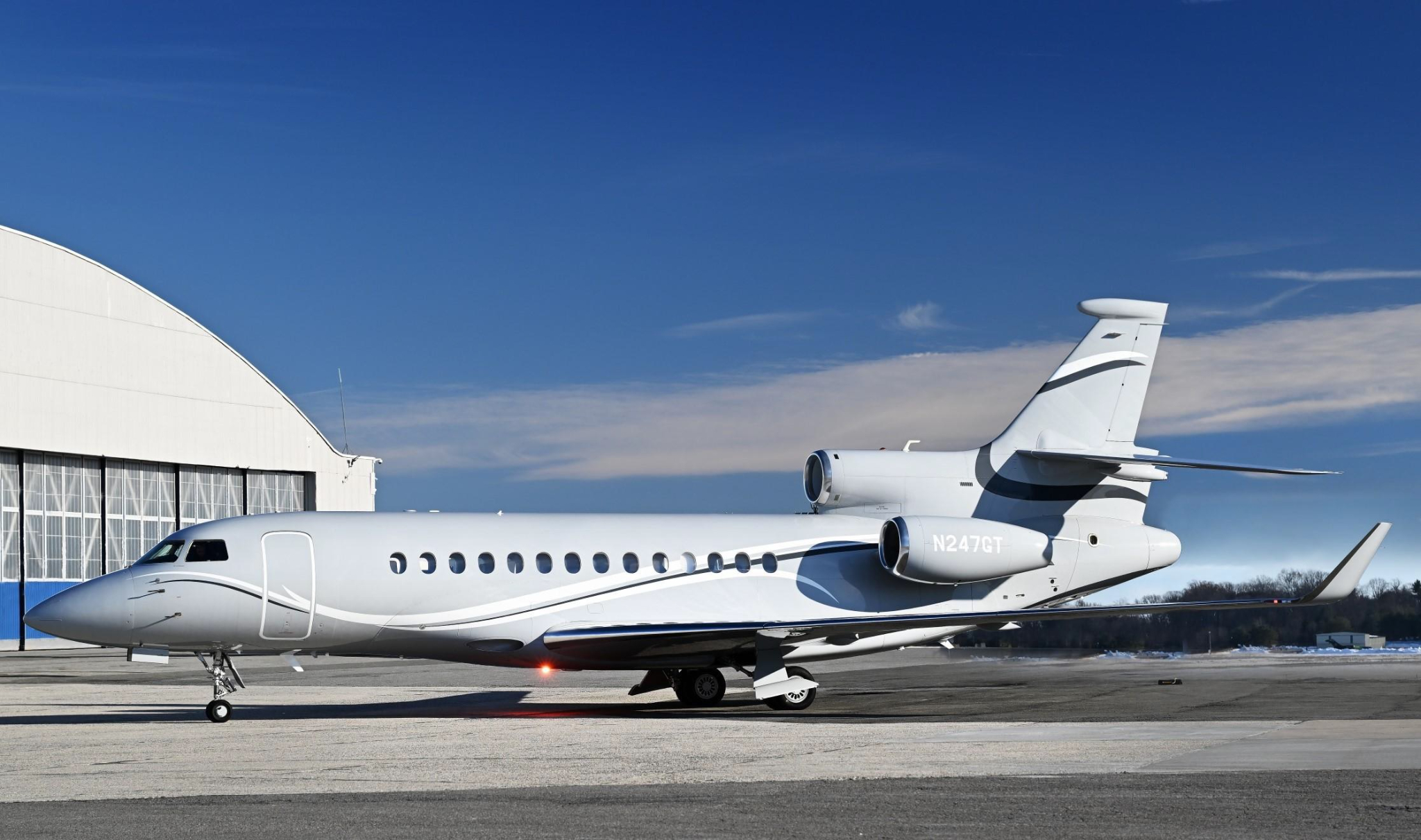
Specifications
Aircraft Details
- 2C check completed in 2024
- Easy II certification with FANS, WAAS, LPV, HUD, and Synthetic Vision (SVS)
- Equipped with KU-Band WiFi
- New paint applied in 2024, overall grey with white and dark grey accent stripes
- Engine model: PW307A, with ESP-GOLD maintenance program
- Engine total hours:
- Engine 1: 6,615 hours, 2,388 cycles
- Engine 2: 6,683 hours, 2,463 cycles
- Engine 3: 6,402 hours, 2,387 cycles
- Auxiliary Power Unit: Honeywell GTCP 36-150, total time 4,137 hours, enrolled in MSP-GOLD
- Avionics: Honeywell Primus Epic system, triple FMS with dual GPS, enhanced flight vision system, and ADS-B equipped
- Interior configuration: Executive for 14 passengers, partially refurbished in 2016
- Features cream leather seating, mid-cabin dining group, and a forward galley with Nespresso and microwave
- Entertainment: Airshow 410 cabin display with multiple LCD monitors
- Lavatories: Forward crew lavatory and aft lavatory
- Equipped with winglets and various safety systems including TCAS and EGPWS
About this Model
Overview
The Falcon 7X is an ultra-long-range business jet designed around a tri-jet layout and Dassault’s flight-control philosophy, balancing intercontinental legs with access to a broader set of airports than many similar-size long-range jets. It is commonly selected for missions that combine long stage lengths, variable weather/terrain considerations, and a preference for a refined cabin and strong high-speed cruise performance.
Mission Fit
Mission planning typically centers on long legs at high cruise speeds with the ability to carry meaningful payload while keeping options open for alternates. The aircraft’s performance profile can be a differentiator when runway or climb performance constraints are part of the trip, though it may be more aircraft than necessary for predominantly regional flying.
Cabin
The 7X offers a true large-cabin environment with multiple cabin zones depending on layout, supporting a mix of work and rest. Buyers generally experience low cabin noise and a stable ride, with cabin configurations often including a galley sized for long missions and an aft lavatory. Cabin flexibility is a key theme: operators can emphasize seating density, lounge areas, or dedicated rest capability depending on typical stage length and passenger count.