

Specifications
Broker
Aircraft Details
• One owner since new, always hangared, U.S. based
• Professionally operated under Part 91
• Engines enrolled on JSSI, no deferments
• Airframe enrolled on EEC Enhanced
• Garmin Prodigy Touch (G3000) flight deck
• DME, ADF, WAAS/LPV, TCAS II v7.1, Dual Mode S ADS-B Out, Ice Detection, FDR, TAWS Class A, Radio Altimeter, CPDLC, SurfaceWatch, Reactive Windshear
• Refreshment center with side-facing divan, belted lavatory with mirror and sink
• Permagard Paint Protection, recent annual inspection completed
• Gogo 5G WiFi with Text & Talk, upgraded cockpit floor, upgraded baggage carpet and metal guard
• Tow bar, Jet Mattress, FAA certified life raft (12 people)
• Premium cabin management, XM Satellite Radio, in-flight phone and datalink, premium seat, sunshade/visor, premium passenger door
• Life vests for 11 seats, 77 cu. ft. oxygen bottle
• Total time: 1,170 hours, 590 landings
• Airworthy, maintenance tracked with CAMP
• Engines: Pratt & Whitney PW535E, 1,170 hours SNEW, 590 cycles
About this Model
Overview
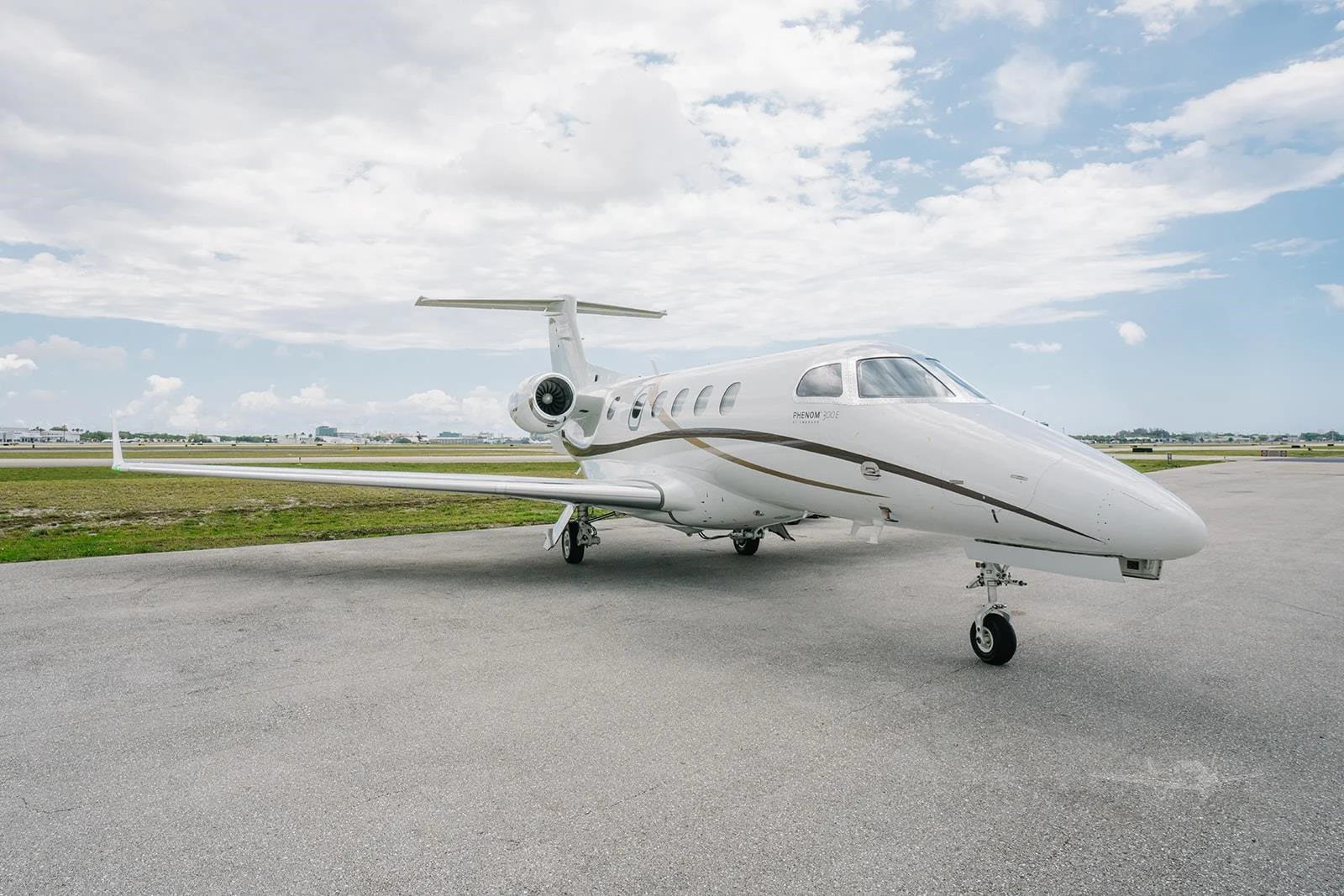
The Phenom 300E is an evolution of Embraer’s Phenom 300 series, positioned at the top end of the light-jet segment. It combines strong cruise performance, a practical cabin for 6–8 occupants depending on layout, and avionics aimed at reducing workload. It is commonly chosen for frequent regional and short-to-medium domestic missions where airport access, dispatch reliability, and straightforward operations matter.
Mission Fit
In day-to-day use, the 300E tends to fit operators who value speed and schedule flexibility over maximum cabin size. It is well-suited to point-to-point business travel between regional city pairs, including airports with runway or infrastructure constraints that can be less convenient for larger jets. When missions regularly push toward longer stage lengths with full seating and baggage, stepping up a category typically provides more margin.
Cabin
The cabin emphasizes a clean, modern interior with club-style seating and a fully enclosed aft lavatory in typical configurations. Passenger experience is generally defined by a quiet, comfortable ride for a light jet and a layout that works best for small groups. Baggage is typically split between an aft external compartment and in-cabin storage depending on configuration; evaluating how your typical luggage load fits is important.