

Specifications
Broker
Aircraft Details
- Pilatus Service Center maintained, one U.S. owner since new
- Based at Oxford, Connecticut (KOXC)
- Airframe total time: 1,399 hours, 1,254 landings
- Engines: 2 x FJ44-4A, both on TAP Blue maintenance program, 1,399 hours/1,254 cycles each
- Honeywell ACE USA Deluxe avionics suite with dual 12” PFD/MFD, SmartView synthetic vision, cursor control device, wireless connected flight deck
- Advanced safety: TCAS II, EGPWS, radar altimeter, dual Mode S transponders (ADS-B In & Out), cockpit voice recorder, flight data recorder
- Connectivity: GoGo ATG 2000 Wi-Fi, SATCOM, HF radio, XM graphical weather
- Executive 6+2 “Aspen” interior: adjustable leg rests, forward & aft storage, power outlets, welcome display, externally-serviceable enclosed lavatory
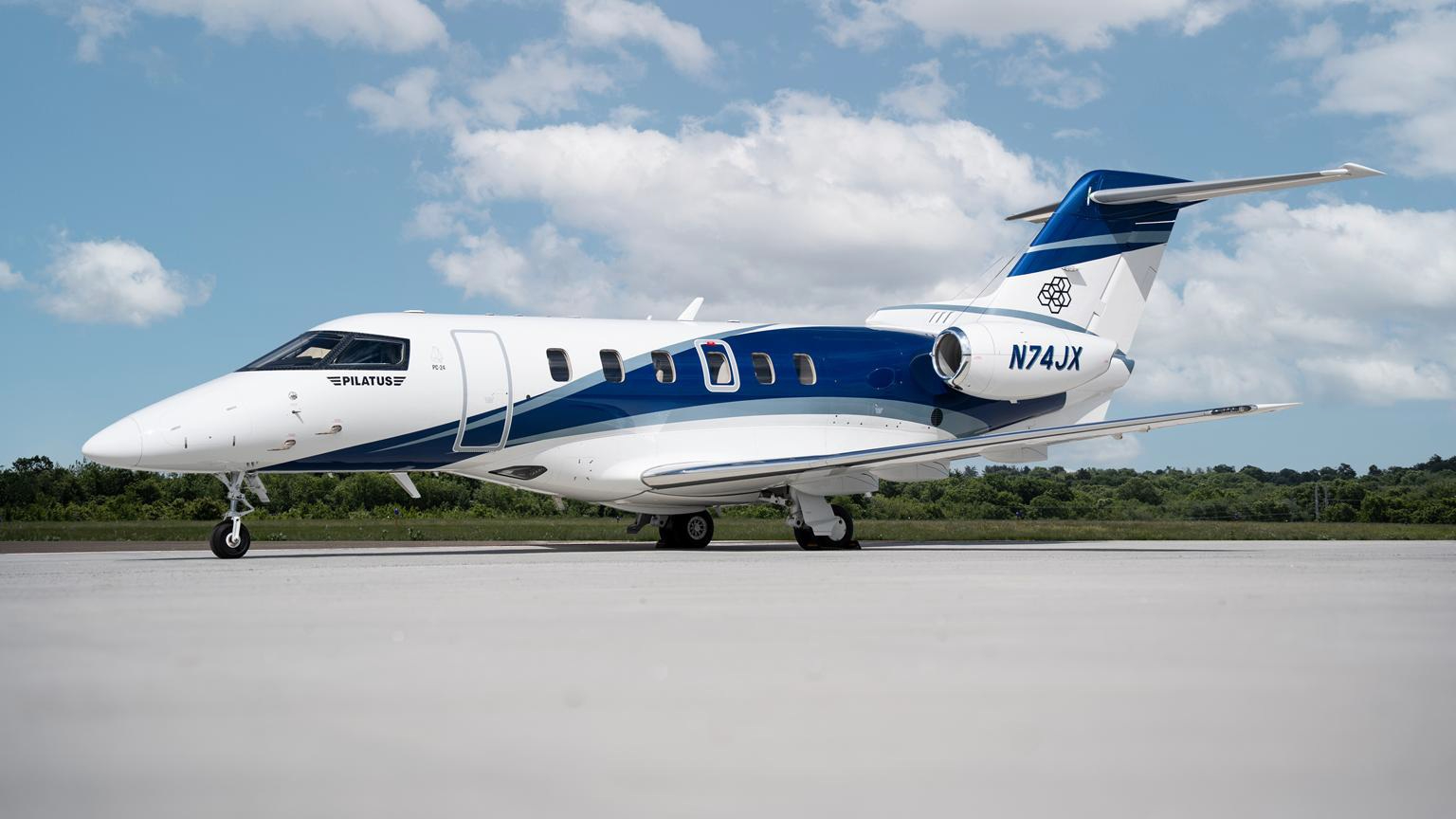
- Exterior: Snow white base with Virga blue, light blue & cool gray accents
- Maintenance: Inspections due from Oct 2026 to Sep 2030 (12-72 months)
- Additional equipment: pulsing recognition lights, dual Ni-Cad batteries, Honeywell ChartLink, autothrottle
- Crystal Care Coverage 100%, three-place divan, higher max takeoff weight
- Enrolled on Honeywell Avionics & Maintenance Protection Plan
About this Model
Overview
The Pilatus PC-24 is a twin‑engine light jet designed to bridge the gap between turboprop access and jet cruise capability. Its defining attribute is the ability to operate from shorter runways, including certain grass or gravel surfaces (subject to performance planning and operator approvals), enabling direct access to airfields that are often impractical for many jets in the same class. It pairs that access with a practical cabin and a large cargo door aimed at mixed passenger-and-baggage missions.
Mission Fit
PC-24 missions tend to center on reliable access and schedule control: flying closer to the final destination, reducing ground transfers, and supporting mixed payloads. It is well-suited to day trips and multi-leg itineraries where shorter-field capability and quick turnarounds matter. For buyers whose missions are dominated by long nonstop legs, larger-cabin aircraft with more fuel and higher cruise ceilings may be a better match.
Cabin
The cabin is arranged to be functional and adaptable, typically with a club seating section and options for additional seats depending on interior and certification. A key differentiator is the large aft cargo door that supports loading bulky items more easily than many light jets, which can reduce compromises on baggage when traveling with equipment. Expect a business-jet environment focused on practical space and mission flexibility rather than a heavy emphasis on ultra-quiet isolation.