

Specifications
AI Description
- Engines: Williams FJ44-4A-QPM, TAP Blue Program, 1,699 hours since new, TBO 5,000 hours, 1,518 cycles.
- Maintenance: 6-year inspection complied with May 2025; 600 hrs/12 mo, 1,200 hrs/24 mo, 1,800 hrs/36 mo, 3,600 hrs/72 mo all due by May 2025.
- Avionics: Honeywell Primus Epic 2.0, Smartview Synthetic Vision, dual PFD controllers, dual KGS200 GPS, dual channel autopilot, ADS-B In/Out, TCAS II, integrated cabin management system.
- Interior: Executive 6+2 configuration, light grey leather seats, premium lighting package, veneer package, forward lavatory with sink, aft galley with insulated cool box, entryway stone flooring.
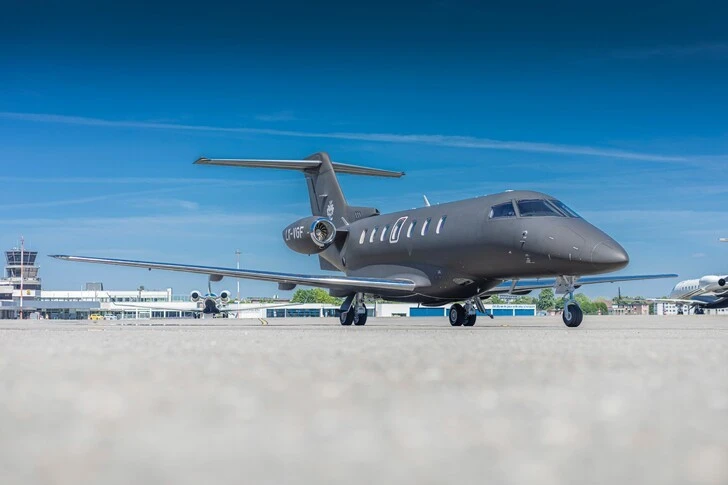
- Exterior: Grey with white markings, painted in 2019.
- Additional Features: Steep approach capability, unpaved operations kit, emergency and safety equipment, logo lights.
About this Model
Overview
The Pilatus PC-24 is a twin‑engine light jet designed to bridge the gap between turboprop access and jet cruise capability. Its defining attribute is the ability to operate from shorter runways, including certain grass or gravel surfaces (subject to performance planning and operator approvals), enabling direct access to airfields that are often impractical for many jets in the same class. It pairs that access with a practical cabin and a large cargo door aimed at mixed passenger-and-baggage missions.
Mission Fit
PC-24 missions tend to center on reliable access and schedule control: flying closer to the final destination, reducing ground transfers, and supporting mixed payloads. It is well-suited to day trips and multi-leg itineraries where shorter-field capability and quick turnarounds matter. For buyers whose missions are dominated by long nonstop legs, larger-cabin aircraft with more fuel and higher cruise ceilings may be a better match.
Cabin
The cabin is arranged to be functional and adaptable, typically with a club seating section and options for additional seats depending on interior and certification. A key differentiator is the large aft cargo door that supports loading bulky items more easily than many light jets, which can reduce compromises on baggage when traveling with equipment. Expect a business-jet environment focused on practical space and mission flexibility rather than a heavy emphasis on ultra-quiet isolation.