

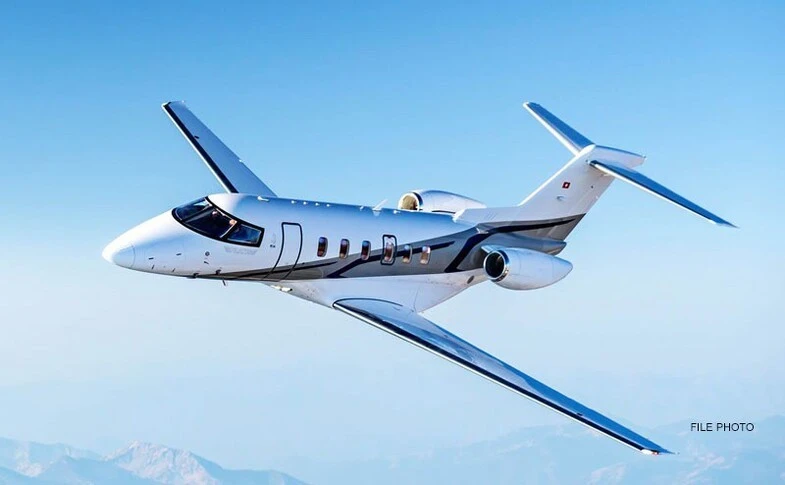
Specifications
AI Description
- Configuration: Executive, 8 passengers
- Interior Features: Soft leather, fine wood finishes, Swiss-crafted detailing, forward galley/refreshment center, mid-cabin 4-place club, four aft forward-facing seats, aft storage/baggage area, forward lavatory
- Exterior: Matterhorn white with a single red stripe, original exterior as of August 2025
- Engines: FJ44-4A-QPM, enrolled on JSSI, time since new: 1,932 hours, cycles: 1,585
- Avionics: Honeywell ACE, dual PFD displays, SmartView synthetic vision system, TCAS II, weather radar (Honeywell RDR-7000), electronic standby instruments, distance measure equipment (DME)
- Safety Features: Traffic Collision Avoidance System (TCAS II), Terrain Awareness & Warning System (TAW), Emergency Locator Transmitter (ELT), Flight Data Recorder (FDR)
- Maintenance: CAMP tracking program, no accident or incident history, always hangared, next inspections due in June 2025 and May 2026 for various intervals
- Overall Condition: One owner since new, maintained with no damage history
About this Model
Overview
The Pilatus PC-24 is a twin‑engine light jet designed to bridge the gap between turboprop access and jet cruise capability. Its defining attribute is the ability to operate from shorter runways, including certain grass or gravel surfaces (subject to performance planning and operator approvals), enabling direct access to airfields that are often impractical for many jets in the same class. It pairs that access with a practical cabin and a large cargo door aimed at mixed passenger-and-baggage missions.
Mission Fit
PC-24 missions tend to center on reliable access and schedule control: flying closer to the final destination, reducing ground transfers, and supporting mixed payloads. It is well-suited to day trips and multi-leg itineraries where shorter-field capability and quick turnarounds matter. For buyers whose missions are dominated by long nonstop legs, larger-cabin aircraft with more fuel and higher cruise ceilings may be a better match.
Cabin
The cabin is arranged to be functional and adaptable, typically with a club seating section and options for additional seats depending on interior and certification. A key differentiator is the large aft cargo door that supports loading bulky items more easily than many light jets, which can reduce compromises on baggage when traveling with equipment. Expect a business-jet environment focused on practical space and mission flexibility rather than a heavy emphasis on ultra-quiet isolation.