

Specifications
Broker
Aircraft Holdings Partnership, LLC
Visit websiteC.W. "Kip" Hayes
443-852-5542
kip@ac-holdings.netAircraft Details
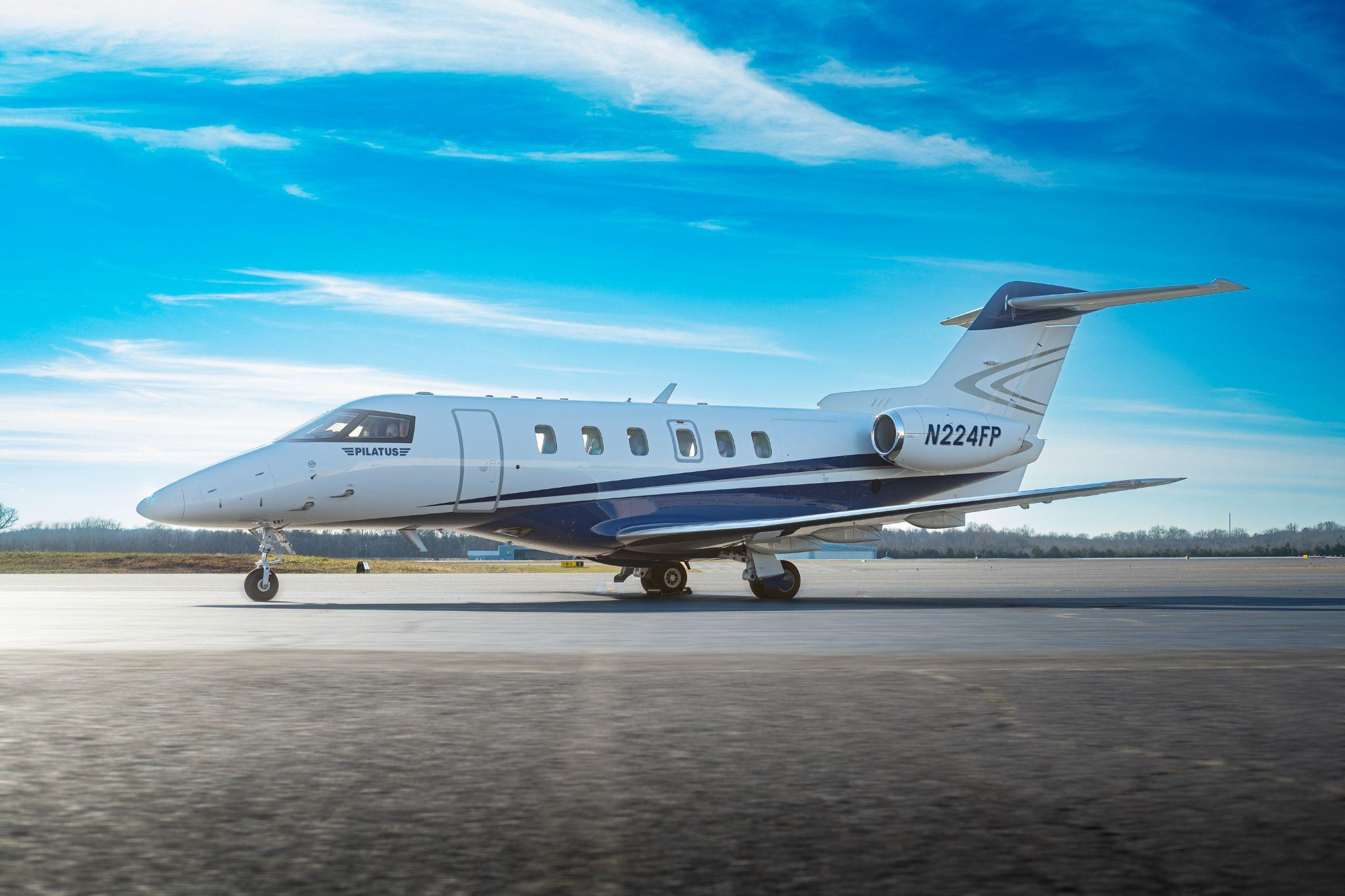
- The Pilatus PC-24 is a versatile twin-engine jet designed for short runways and rough airstrips.
- It features a spacious cabin with seating for up to 8 passengers, offering a comfortable travel experience.
- Equipped with advanced avionics and a state-of-the-art flight deck, enhancing safety and operational efficiency.
- The aircraft boasts impressive performance capabilities, including a maximum cruise speed of 440 knots and a range of approximately 2,000 nautical miles.
- It has a unique cargo door that allows for easy loading and unloading of baggage and cargo.
- The PC-24 is certified for single-pilot operations, making it accessible for private owners.
- With its innovative design and technology, the PC-24 is suitable for both business and leisure travel.
- The aircraft is known for its fuel efficiency and lower operating costs compared to similar jets.
About this Model
Overview
The Pilatus PC-24 is a twin‑engine light jet designed to bridge the gap between turboprop access and jet cruise capability. Its defining attribute is the ability to operate from shorter runways, including certain grass or gravel surfaces (subject to performance planning and operator approvals), enabling direct access to airfields that are often impractical for many jets in the same class. It pairs that access with a practical cabin and a large cargo door aimed at mixed passenger-and-baggage missions.
Mission Fit
PC-24 missions tend to center on reliable access and schedule control: flying closer to the final destination, reducing ground transfers, and supporting mixed payloads. It is well-suited to day trips and multi-leg itineraries where shorter-field capability and quick turnarounds matter. For buyers whose missions are dominated by long nonstop legs, larger-cabin aircraft with more fuel and higher cruise ceilings may be a better match.
Cabin
The cabin is arranged to be functional and adaptable, typically with a club seating section and options for additional seats depending on interior and certification. A key differentiator is the large aft cargo door that supports loading bulky items more easily than many light jets, which can reduce compromises on baggage when traveling with equipment. Expect a business-jet environment focused on practical space and mission flexibility rather than a heavy emphasis on ultra-quiet isolation.